Dragon Tiger: How to Play
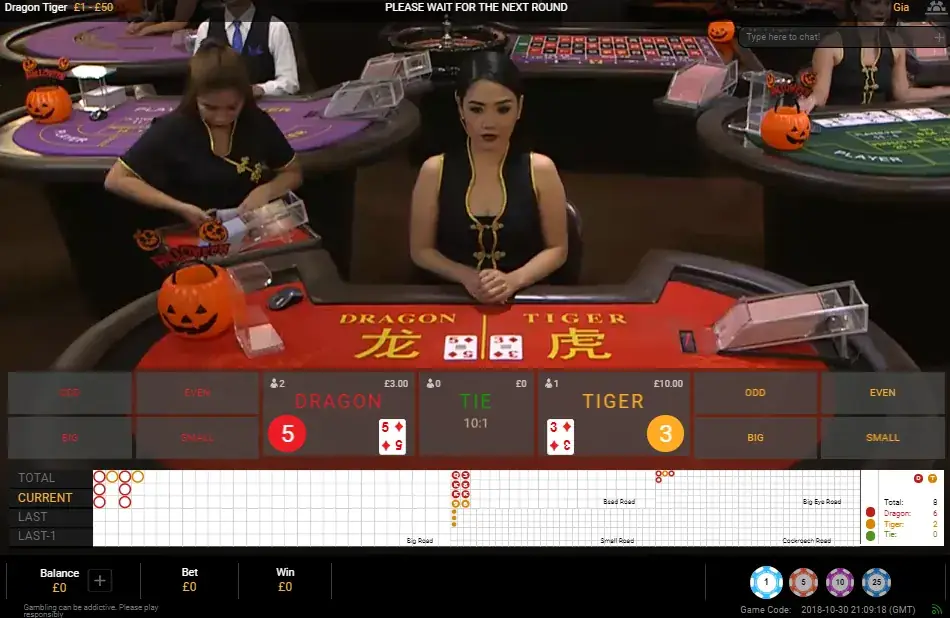
Dragon Tiger is a live dealer card game streamed from a studio, not a video slot. It is a simplified, high-speed version of baccarat where players bet on which of two hands, Dragon or Tiger, will receive the higher-ranking card. The game is provided by Evolution Gaming and is known for its straightforward rules and rapid rounds.
This guide explains the core gameplay, available bets, and the structure of a typical session. It provides practical information for understanding how the game functions before placing real-money wagers.
Basic Game Rules and Format
Dragon Tiger is a live table game. A real dealer streams from a studio and uses a standard 52-card deck, or multiple decks shuffled together. The objective is to predict which of two positions, Dragon or Tiger, will receive the card with the higher value. Cards are ranked from low to high: Ace (low), 2, 3, 4, 5, 6, 7, 8, 9, 10, Jack, Queen, King (high). Suits do not affect the card's rank for the main bet.
Each round is fast, often lasting between 15 and 25 seconds. The dealer draws one card for the Dragon position and one card for the Tiger position. If the Dragon card is higher, Dragon wins. If the Tiger card is higher, Tiger wins. If both cards are of equal rank, it is a Tie. In the event of a Tie, bets on Dragon or Tiger are typically returned, or sometimes forfeited, depending on the specific game rules. Players can also place bets specifically on a Tie or a Suited Tie occurring.
Step-by-Step First Session
- Join a Dragon Tiger table from a live casino lobby. You will see a live video feed of the dealer and the game table.
- You will have a betting timer, often around 12 seconds, to place your chips. The main betting areas are marked Dragon, Tiger, Tie, and Suited Tie.
- Select your chip value and click on the betting area where you want to wager. You can place multiple bets on different outcomes in a single round.
- Once the betting time closes, the dealer will draw one card from the shoe and place it face-up on the Dragon position.
- The dealer then draws a second card and places it face-up on the Tiger position.
- The game software automatically compares the two cards and announces the winner. Winning bets are highlighted and paid out according to the payout table.
- The round ends, and a new betting timer begins for the next round. Past results are often displayed on scorecards or roadmaps next to the video stream.
Betting Options, Payouts and Strategy
The following table details the standard betting options and their payouts for the core Dragon Tiger game. Payouts are expressed as a ratio (e.g., 1:1 means you win an amount equal to your bet, in addition to getting your original stake back). The maximum win is 50:1. The theoretical Return to Player (RTP) for the main Dragon and Tiger bets is 96.27%. Side bets like Tie and Suited Tie have different RTP values, which are generally lower.
| Bet Type | Description | Payout |
|---|---|---|
| Dragon | Bet that the Dragon card will be higher. | 1:1 |
| Tiger | Bet that the Tiger card will be higher. | 1:1 |
| Tie | Bet that both cards will be of equal rank. | 11:1 |
| Suited Tie | Bet that both cards will be of equal rank AND the same suit. | 50:1 |
The Dragon and Tiger bets have the lowest house edge, offering the best long-term RTP. The Tie and Suited Tie bets offer higher payouts but have a significantly higher house edge and lower RTP, making them high-volatility options within the game. No betting strategy can overcome the fixed house edge. The most prudent approach is to stick to the main bets and manage your bankroll carefully due to the game's fast pace.
Game Features and Variants
The primary feature of the standard game is its simplicity and speed. Some variants introduce additional features. For example, Lightning Dragon Tiger adds a feature where a random suit is assigned a multiplier before the cards are dealt. If the winning card matches that suit, the payout for the main Dragon or Tiger bet is multiplied. A fee is charged for this chance. This feature does not change the base RTP of the main bet.
The game is a live dealer product, so it includes standard live casino features like a chat function to communicate with the dealer, multiple camera angles, and displayed statistics or roadmaps (like Bead Road, Big Road) tracking previous results. These are for informational purposes only and do not predict future outcomes.
Bet Sizing and Volatility
Dragon Tiger is classified as a low volatility game. This means wins occur relatively frequently, but the size of wins is typically limited to the even-money payouts for the main bets. The large payouts from Tie and Suited Tie bets are rare, contributing to their higher volatility within the same game.
Bet limits are set by the provider and the operator. According to verified facts, the minimum bet can be as low as $0.50 and the maximum bet can go up to $25,000. These figures are in the original currency from the source. It is important to check the specific limits on the table you join. Bankroll management should account for the fast pace of the game. Setting a loss limit and a session time limit is a practical approach, as no strategy can overcome the game's house edge.
Statistical Profile and Player Expectations
Understanding the statistical framework of Evolution Gaming's Dragon Tiger is essential for players to set realistic expectations. The game's Return to Player (RTP) of 96.27% is a critical figure. This represents the theoretical percentage of all wagered money that the game will pay back to players over an extended period. This RTP applies specifically to the main Dragon and Tiger bets. It is important to note that operators may sometimes run a lower RTP version, so players should check the specific table information before playing. The 96.27% figure translates to a house edge of 3.73% on these primary wagers, which is a relatively low margin for a live casino game.
The game's volatility is classified as low. This statistical measure indicates the frequency and size of wins. Low volatility means that wins occur relatively often, but they are typically limited to the even-money payouts offered by the Dragon and Tiger bets. This creates a gameplay experience characterised by steady, smaller returns rather than long droughts followed by large windfalls. The low volatility profile aligns with the game's simple and rapid format, appealing to players who prefer a consistent, fast-paced betting rhythm without extreme swings in their bankroll.
Player expectations should be calibrated against the maximum win potential. The highest payout available in the standard game is 50:1, offered by the Suited Tie side bet. However, the probability of landing this bet is extremely low, which is reflected in its higher house edge compared to the main bets. The main Dragon and Tiger bets, with their 1:1 payout, will form the overwhelming majority of a player's action and results. The game's hit rate, reported as 1 in 2.2 in some sources, further supports the expectation of frequent, smaller wins. This statistical profile makes Dragon Tiger a game of endurance and bankroll management rather than one focused on chasing a single large jackpot.
The betting range, from $0.50 to $25,000, accommodates a wide spectrum of players, from casual enthusiasts to high rollers. This broad range, combined with the low volatility, allows for flexible betting strategies. Players can choose to wager small amounts to extend their session time and enjoy the live dealer interaction, or they can place larger bets within the confines of the game's predictable payout structure. The key expectation is that the game will deliver quick, decisive outcomes with a known and moderate long-term cost of play, as defined by its RTP and volatility.
Key Terms Glossary
- Dealing Shoe: The device that holds the deck(s) of cards from which the dealer draws.
- RTP (Return to Player): The theoretical percentage of all wagered money a game will pay back to players over time. For Dragon/Tiger bets, it is 96.27%.
- Tie: A round where the Dragon and Tiger cards have the same rank.
- Suited Tie: A Tie where the two cards also share the same suit (e.g., both are Kings of Hearts).
- Roadmaps/Scorecards: Visual patterns (e.g., Big Road, Bead Road) that display the history of previous round outcomes.
- Live Dealer: A real person who conducts the game, streamed live from a studio.
Dragon Tiger: questions and answers
Is Dragon Tiger a slot machine?
No, Dragon Tiger is not a slot machine. It is a live dealer card game streamed from a studio. There are no reels, paylines, or free spins. It involves betting on the outcome of two cards being dealt.
What is the best bet in Dragon Tiger?
The Dragon and Tiger bets have the highest RTP at 96.27%, making them the bets with the lowest theoretical house edge. Tie and Suited Tie bets offer higher payouts but have a significantly lower RTP.
Can I use a strategy to win at Dragon Tiger?
Dragon Tiger is a game of chance with fixed odds. While betting systems can manage your bankroll, no strategy can change the inherent house edge or predict the random outcome of the next card.
What happens if there is a tie?
If the two cards have equal rank, it is a Tie. Standard rules often state that bets on Dragon and Tiger are pushed (returned) or sometimes lost. Bets placed on the Tie or Suited Tie outcomes are paid if they match the result.
What is the minimum age to play for real money in South Africa?
You must be 18 years or older to gamble for real money in South Africa. Real-money play should only take place at sites licensed by the relevant provincial gambling boards.
Are there different versions of Dragon Tiger?
Yes. The core game is offered by several providers. Evolution Gaming's version is widely used. Variants like Lightning Dragon Tiger add multiplier features. Other providers may have different table designs or side bets.