Dragon Tiger: How to Play
Dragon Tiger is a live dealer table game streamed from a studio, not a video slot. It is a simplified, high-speed version of Baccarat where players bet on which of two hands, Dragon or Tiger, will receive the higher-ranking card. The game is known for its straightforward rules and rapid rounds, typically concluding within 20 to 25 seconds.
This guide explains the core mechanics, betting options, and strategic considerations for Dragon Tiger, focusing on the live dealer format provided by studios like Evolution Gaming. It details the available wagers, their respective payouts and Return to Player (RTP) percentages, and how side bets like the Tie and Suited Tie function within the game flow.
Game Rules and Objective
Dragon Tiger is played with a standard 52-card deck, excluding jokers. Aces are low, Kings are high. The dealer draws two cards, placing one on the Dragon position and one on the Tiger position. The objective is to predict which position will receive the card with the higher value. If both cards are of equal rank, the result is a Tie.
Players place bets on one of four outcomes before the cards are dealt. The primary bets are on Dragon or Tiger. Side bets include a standard Tie and a Suited Tie, which wins only if the two cards are of identical rank and suit. The game proceeds quickly, with a betting window of approximately 12 seconds before the dealer reveals the cards.
A Step-by-Step First Session
- Select a Dragon Tiger table. The game interface will show the betting area with positions for Dragon, Tiger, Tie, and Suited Tie bets.
- Place your chips on your chosen betting position. The minimum bet is typically $0.50, and the maximum can reach $25,000, depending on the table limits.
- Confirm your bet before the betting timer, usually around 12 seconds, expires.
- The dealer will draw one card from the shoe and place it face-up on the Dragon position.
- The dealer draws a second card and places it face-up on the Tiger position.
- If you bet on Dragon and its card is higher, you win at 1:1 odds. If you bet on Tiger and its card is higher, you win at 1:1 odds. If the cards tie in rank, Tie bets win. If they also share the same suit, Suited Tie bets win.
- Winnings are credited automatically. A new betting round begins shortly after.
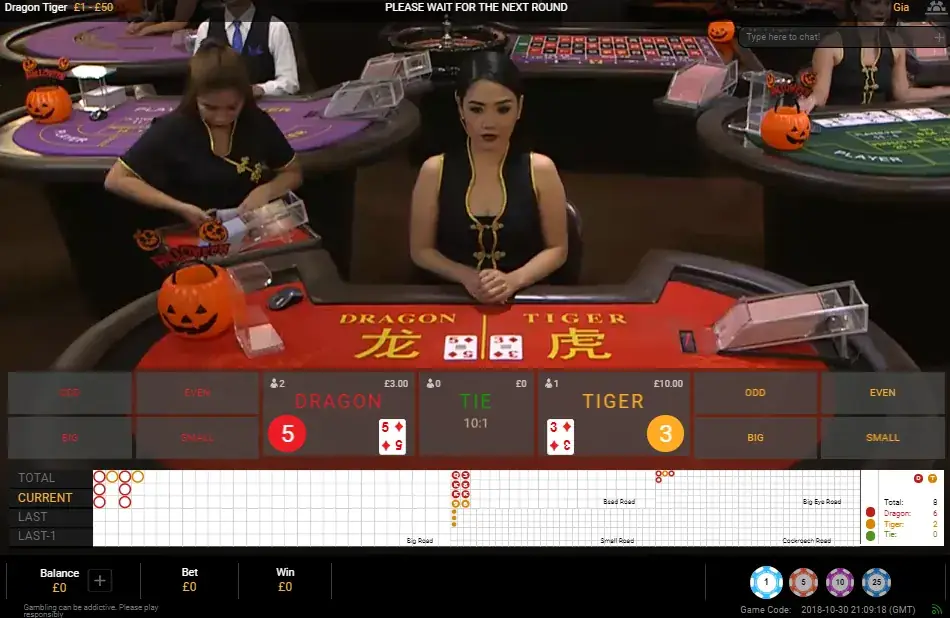
Betting Options, Payouts, and Features
The following table details the standard betting options and their payouts in Dragon Tiger. The Return to Player (RTP) percentages are based on the developer's default configuration. Operators may offer tables with different RTP settings.
| Bet | Payout | Description | RTP (Default) |
|---|---|---|---|
| Dragon | 1:1 | Wins if the Dragon card is higher than the Tiger card. | ~96.27% |
| Tiger | 1:1 | Wins if the Tiger card is higher than the Dragon card. | ~96.27% |
| Tie | 11:1 | Wins if both cards are of equal rank. | Lower than main bets |
| Suited Tie | 50:1 | Wins if both cards are of equal rank and suit. | Lower than main bets |
The maximum win multiplier in the standard game is 50:1 for the Suited Tie bet. The core feature of Dragon Tiger is its speed and simplicity. Beyond the main Dragon/Tiger wager, the game includes side bets that offer higher payouts but come with a higher house edge and lower RTP.
Bet Sizing and Volatility
Dragon Tiger is a Low volatility game. This means wins occur frequently, but they are typically at even money (1:1). The game's RTP for the main Dragon and Tiger bets is 96.27% by default. Side bets have significantly lower RTP percentages.
Bet sizing should reflect the game's characteristics. Given the low volatility and high hit frequency of the main bets, a conservative bankroll management strategy is common. Players often use flat betting, wagering the same amount on each round. The wide betting range, from $0.50 to $25,000, accommodates both casual and high-stakes players. No strategy can overcome the house edge inherent in the game's design.
Game Variations and Provider Differences
The Dragon Tiger game is offered in distinct formats by different software providers. The live table version, such as the one provided by Evolution Gaming, is the core card game. It is a live dealer game with an RTP of 96.27% for the main bets, low volatility, and bet limits ranging from $0.50 to $25,000. This version focuses on the direct card comparison between Dragon and Tiger positions.
In contrast, several other providers have developed video slot games under the "Dragon Tiger" name. These are not card games but traditional online slots with reels, paylines, and bonus features. Understanding these variations is crucial for players. The live dealer game from Evolution is a pure game of chance based on card ranks, prized for its speed and simplicity. The slot adaptations are complex games of chance with thematic symbols and significantly different mathematical models. The features, volatility, and betting structures are not interchangeable between these distinct game types.
Gameplay Experience and Pacing
The Dragon Tiger live table game offered by Evolution Gaming is defined by its exceptionally rapid pace. Each round, from the close of betting to the reveal of the two cards, is designed to conclude within approximately 20 to 25 seconds. This creates a high-frequency gaming experience where outcomes are determined quickly and continuously. The speed transforms the game from a contemplative card game into a fast-paced event, aligning it more with the instant results of a slot spin than the drawn-out strategy of poker or blackjack. This pacing is a core characteristic that appeals to players seeking immediate action and a high volume of game rounds within a short session.
This fast tempo is facilitated by the game's fundamental simplicity. With only two cards in play per round and a straightforward higher-or-lower objective, there is minimal procedural delay. The dealer's actions are swift and ritualized, dealing one card to the Dragon position and one to the Tiger position. The absence of player decisions after the initial bet, such as drawing additional cards or making strategic choices, eliminates pauses in the gameplay. The result is a seamless, uninterrupted flow that can deliver dozens of outcomes in just a few minutes, catering to a modern preference for quick-hit entertainment.
The rapid pace directly influences betting patterns and bankroll management. Because rounds are resolved so quickly, players can experience significant fluctuations in their balance in a very short time, even with the game's low volatility. The frequent, predominantly even-money outcomes mean wins and losses arrive in quick succession. This environment requires a mindful approach to stake size, as the default minimum bet of $0.50 and maximum of $25,000 allow for a vast range of betting strategies. Players must adjust their bet sizing to withstand potential rapid sequences of losses without exhausting their funds, a consideration that is more acute in Dragon Tiger than in slower table games.
Furthermore, the speed of the game impacts the role of the live dealer and the social atmosphere. While the dealer presides over the action and interacts with players, the conversation is often brisk and limited by the constant need to move to the next round. The primary focus remains on the cards and the betting results rather than prolonged engagement. This makes the experience ideal for players who enjoy the authenticity and human element of a live studio broadcast but prioritize constant gameplay over extended social interaction. The combination of rapid decisions, simple rules, and live presentation creates a distinct niche within the live casino landscape.
Key Terms Glossary
- Dragon/Tiger Bet: The primary wager predicting which of the two dealt cards will be higher.
- Tie: A result where the Dragon and Tiger cards have the same rank.
- Suited Tie: A result where the two cards are identical in both rank and suit.
- RTP (Return to Player): The theoretical percentage of all wagered money a game will pay back to players over time. The default for Dragon/Tiger bets is 96.27%.
- Volatility: A measure of risk. Low volatility indicates frequent, smaller wins.
- Dealing Shoe: The device holding multiple decks of cards from which the dealer draws.
- Roadmaps/Scorecards: Graphical displays of historical results, such as the Bead Road or Big Road, used by some players to track trends.
Dragon Tiger: questions and answers
What is the main objective in Dragon Tiger?
The objective is to correctly predict which of two dealt cards, designated Dragon or Tiger, will have the higher value. Aces are low and Kings are high.
What is the RTP for Dragon Tiger?
The default Return to Player for the main Dragon and Tiger bets is 96.27%. The RTP for Tie and Suited Tie side bets is lower. Operators may run tables with different RTP settings.
What happens if the Dragon and Tiger cards tie?
If the cards are of equal rank, it is a Tie. Bets on the Tie win at 11:1. Bets on Dragon or Tiger typically lose.
What is the difference between a Tie and a Suited Tie?
A Tie requires the two cards to have the same rank. A Suited Tie requires the two cards to be identical in both rank and suit, which pays out at 50:1.
Is there a strategy to guarantee wins in Dragon Tiger?
No. Dragon Tiger is a game of chance with a fixed house edge. Betting systems cannot change the underlying odds. The most common approach is flat betting on the main Dragon or Tiger wagers due to their higher RTP.
What is the maximum win in Dragon Tiger?
The maximum win multiplier in the standard game is 50:1, achieved by winning a Suited Tie bet.